
Airborne particle count testing, measured the way it's meant to be read
Vanavil Calibrations carries out particle count testing on-site using a particle counter sampled at defined locations within your cleanroom, operation theatre or cabinet — feeding a direct, defensible reading into your space's overall classification.
How an airborne particle count is actually measured
A particle counter draws a known volume of air through a sensor and counts the particles it detects, sorted at multiple size thresholds relevant to the space's classification. That single reading — taken at a single point, at a single moment — is the raw data behind every particle count test.
What separates a meaningful particle count test from a token measurement is where and how that sampling happens. We select sampling locations to represent the space honestly: near work surfaces where product or patient exposure occurs, at air supply and return points where airflow patterns concentrate or clear particulates, and at any worst-case positions the layout or equipment creates. Sampling is carried out at-rest, operational, or both, depending on what the space's classification requires.
This measurement doesn't stand alone. It's one of the core inputs into the broader classification and documentation process covered on our Clean Room Testing and Cleanroom Validation pages — this page focuses specifically on how the particle counting itself is done.
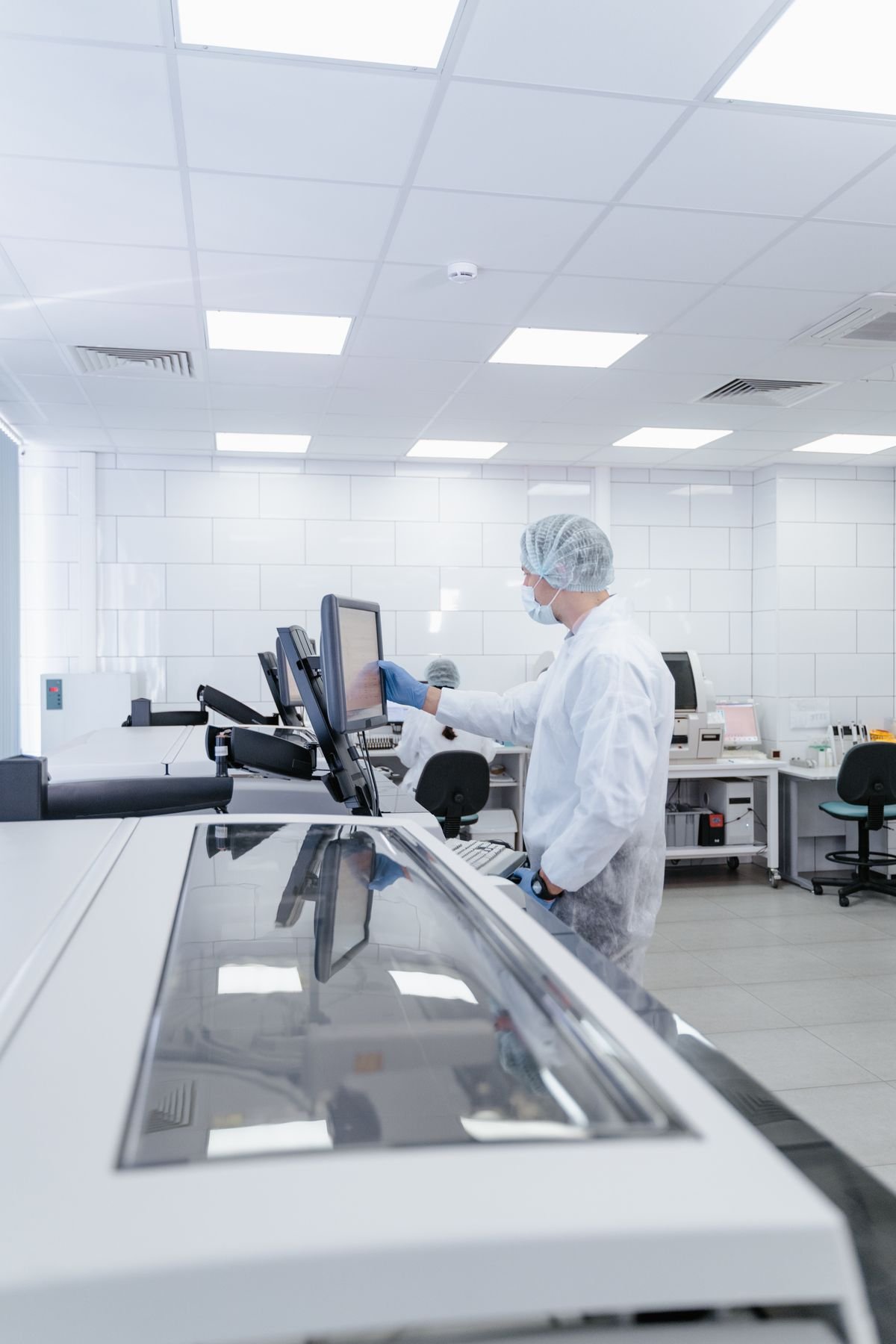
A particle count is the most direct read on air cleanliness
Direct Indicator of Cleanliness
Airborne particle concentration is the measurement a room's classification is actually defined by — not a proxy for it.
Feeds the Room's Classification
The count from each sampling point is what confirms — or fails to confirm — that a space meets its required standard.
Catches Location-Specific Risk
Sampling at work surfaces and worst-case points picks up localised particulate risk that a single average reading would miss.
The method behind every particle count testing visit
- Sampling at multiple locations across the space
- At-rest and/or operational condition sampling
- Comparison against the space's required classification
- Trend tracking across visits
Where particle count testing gets used
Healthcare
Operation theatres & critical care
Pharmaceutical
Manufacturing & sterile areas
Laboratories
Research & QC environments
Industrial
Precision manufacturing
Location Planning
We identify sampling points based on the room's layout — work surfaces, air supply and return points, and worst-case locations.
On-Site Sampling
A particle counter samples air at each location under ISO IEC 17025:2017 procedures, at-rest and/or operational as required.
Classification Comparison
Readings from every sampling point are compared against the classification the space is required to meet.
Documented Report
You receive a report with per-location results, ready for your quality records.
NABL-Accredited
Particle count testing carried out under NABL accreditation and ISO/IEC 17025:2017-compliant procedures.
On-Site & Laboratory Capability
We test at your facility, with laboratory support behind it — one team for the full measurement.
20+ Years, 500+ Clients
Established in 2004, serving healthcare, pharmaceutical, laboratory and industrial clients across Tamil Nadu.
Need particle count testing for your space?
Tell us about your room, cabinet or unit and its classification requirement — we'll scope the sampling locations and schedule.